

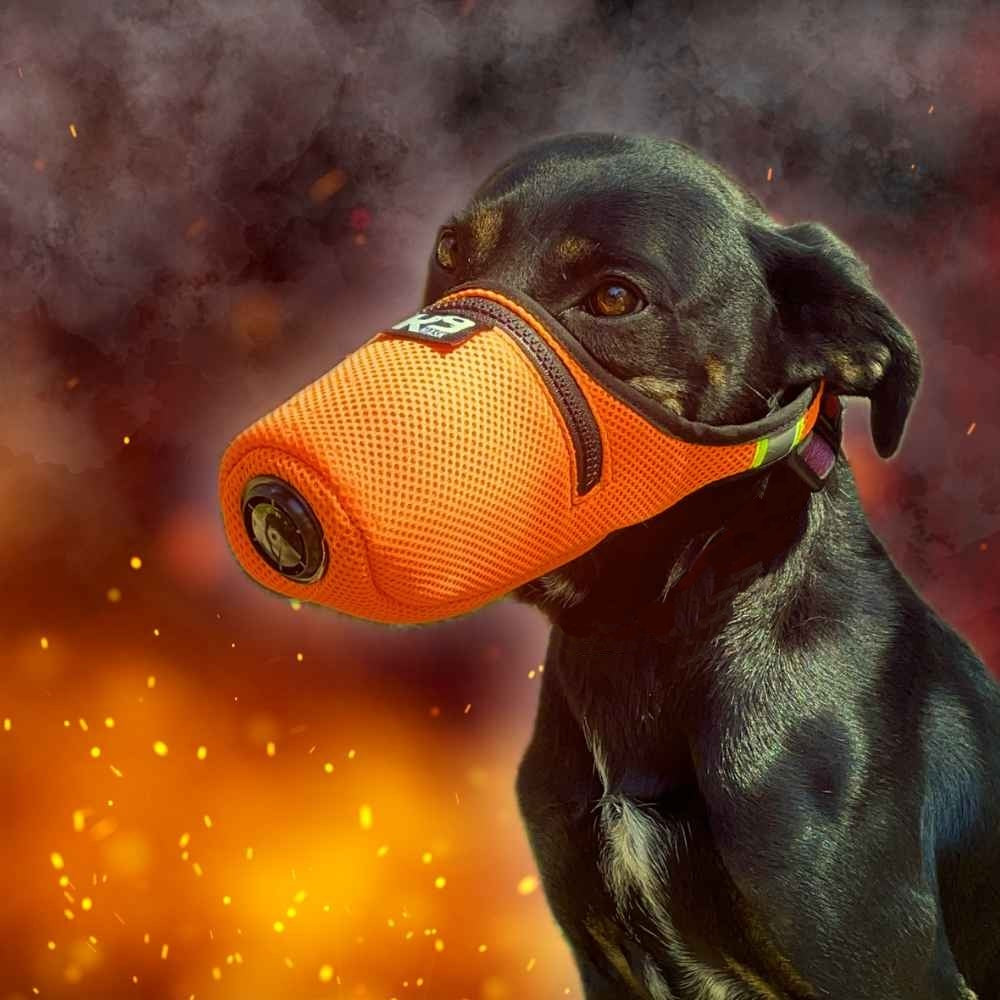

Welcome to summer 2026, where the sunsets are dramatic, the skies are hazy, and your dog is wondering why the air tastes like a campfire that got wildly out of control.
Wildfire season is no longer a “California problem.” From the Rockies to Texas and beyond, air quality alerts are becoming a regular part of summer life. And while we humans might grab a coffee and check the AQI, our dogs are left thinking, “Why does breathing feel like chewing on invisible dust?”

The Science Behind Wildfire Smoke (aka Tiny Trouble You Can’t See)
Wildfire smoke is packed with microscopic particles called PM2.5. These particles are so small that they can travel deep into the lungs and even enter the bloodstream. [Learn more from the EPA and wildfire smoke basics]
Research shows that these particles can cause coughing, inflammation, and even long term damage to the respiratory and cardiovascular system. In other words, it is not just “a little smoky.” It is a full on microscopic invasion.

Why Wildfire Smoke is Especially Hard on Dogs
Here is the problem: dogs cannot tell you when their chest feels tight or when their throat burns.
According to veterinary research, wildfire smoke impacts dogs in many of the same ways as humans, especially affecting the heart and lungs.
Even worse, dogs are often more exposed because:
- They breathe closer to the ground where particles settle
- They spend more time outside
- They cannot wear protection unless we give it to them
- Exposure to wildfire smoke in dogs has been linked to:
- Coughing and wheezing
- Eye irritation and fatigue
- Reduced oxygen intake
- Worsening of asthma and other conditions

Which Dogs Are Most at Risk
Not all dogs experience wildfire smoke the same way.
- Higher risk groups include:
- Older dogs and puppies
- Short snout breeds like bulldogs and pugs
- Dogs with heart or lung conditions
These dogs may experience more severe symptoms even during moderate air quality alerts.

Signs Your Dog is Not Loving the “Smoky Vibes”
If your dog suddenly looks like they ran a marathon but only walked to the mailbox, pay attention.
Watch for:
- Coughing or gagging
- Watery eyes or nasal discharge
- Unusual tiredness
- Difficulty breathing
These are signals that wildfire smoke is not just annoying, it is harmful.
Simple Ways to Protect Your Dog This Summer
Good news: you are not powerless in the face of smoky skies.
Here are a few practical steps:
- Keep walks short when air quality is poor
- Exercise indoors when possible
- Monitor local AQI levels daily
- Create cleaner indoor air environments
And when outdoor exposure is unavoidable, protective solutions matter.
At K9Mask.com, we have been focused on helping dog owners prepare for these exact conditions. You can also read more in our guide: Protecting Dogs from Wildfire Smoke in 2026.

Because Your Dog Trusts You (Even When You Eat in Front of Them)
Your dog does not check air quality apps. They do not understand wildfire patterns. They just trust you.
- They trust you when you grab the leash.
- They trust you when you open the door.
- They trust you when the air smells like a burnt marshmallow factory.
- And that trust matters.
Wildfire smoke is not just an environmental issue. It is a health issue for the animals we love. As wildfire seasons grow longer and more intense, preparation is no longer optional.
It is part of being a good human to a very good dog.
Final Thought
If the air looks bad enough that you would not want to jog in it, your dog probably does not want to fetch in it either.
Stay aware. Stay prepared. And maybe this summer, keep the “smoke” reserved for barbecue where it belongs.


